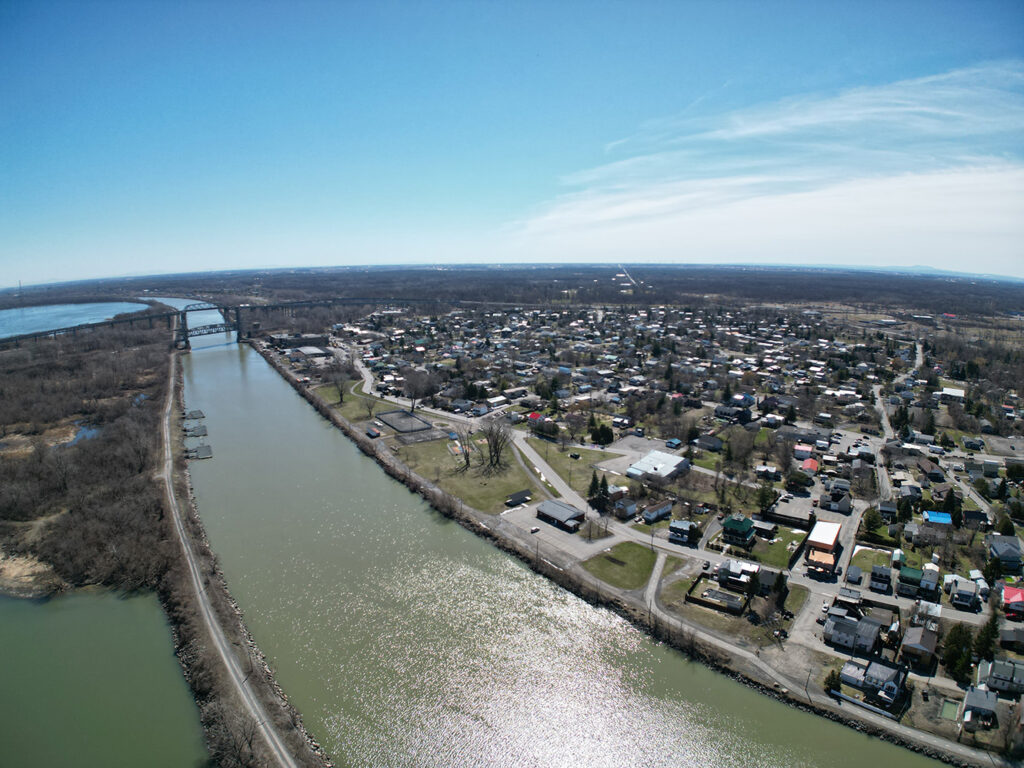
The Mohawk Council of Kahnawà:ke (MCK) is expressing deep concern regarding reports of water polluted with high levels of sulfate and lead, allegedly discharged into the St. Lawrence Seaway by a recycling facility located in the City of Saint-Catherine, adjacent to the Territory.
Until news of the report, the MCK had not been consulted or informed about any water discharge activities into the Seaway from Canada, the Province of Quebec, surrounding municipality, nor the facility in question, Terrapure Environment. Historically, industrial activity in this region has deeply impacted ecological and agricultural life and resulted in the relocation of facilities beyond the eastern boundary.
“It is extremely troubling that this information has only come to light now, long after the alleged activity started,” said Lead Environment portfolio Chief, Ratsénhaienhs Ross Montour. “The MCK does not condone this type of activity, which poses the potential for serious harm to our waters that sustain fish, wildlife, and recreational activities by our youth and community members.”
In 2024, the MCK and MRC de Roussillon established a Technical Liaison Committee as a forum for information-sharing. This partnership was designed to ensure Kahnawà:ke and MRC representatives developed a working relationship and shared information on regional development and operations that could affect one another. Unfortunately, the Liaison Committee was also not aware of the incident from the responsible parties.
“These allegations are incredibly alarming, and the community as a whole is very concerned,” said Ohén:ton Í:rate ne Ratitsénhaienhs Cody Diabo. “The MCK is actively gathering information to understand this situation, and we will provide updates as soon as possible.”
Terrapure Environment represents one of the largest battery recycling facilities in Canada. Environment and Climate Change Canada has accused the company of illegally discharging sulfate and lead at harmful levels into the St. Lawrence Seaway, which is full of aquatic life, and laid 52 federal charges for violations of the Fisheries Act between 2020 and 2023.